Eighteen months ago, on a brilliant fall day, the sky cerulean with nary a cloud visible, my 16-year-old son was driving, while I rode shotgun on the way to his step-sister’s softball tournament. I was still getting used to him driving with his learner’s permit while I did my best to remain calm in the passenger’s seat. Unlike my mother who had screeched and sucked in her breath sharply at every turn when I learned to drive. Suddenly, my son leaned forward and turned off the music. That was my signature car move over the years when I needed to discuss something serious with him; answering the ‘where do babies come from’ question, warning of the dangers of drugs and alcohol when he was a pre-teen, wading through the murky waters of custody and divorce from his dad. These discussions began in the car with me leaning forward to turn off the music. The enclosed, quiet privacy of the car combined with my eyes facing forward, always lent itself well to tackling tricky conversations. I knew this gesture signified he was about to say something heartfelt and important. I tried to squelch the internal panic I felt give rise in my belly. Utoh.
“Mom, I have something to tell you,” he hesitated.
I knew his hesitation wasn’t fear-based; I was confident our relationship transcended the inability to speak about difficult things. Tough conversations, while not always comfortable, came with an ease well-cultivated from a long-trusted, loving, calm, relationship between us.
“Ok,” I said trying to sound nonchalant.
“I didn’t tell you the whole story about why Meg and I broke up,” he said about his recent girlfriend of nine months.
Please, please, please don’t let her be pregnant.
“I really don’t know how to say this,” he struggled a bit.
“It’s ok, whatever it is, you know you can tell me,” I assured. Except if she’s pregnant, don’t tell me that.
A long silence ensued. I tried not to let the lull panic me.
“Mom, I think I’m gay,” he said, “No, actually, I know I’m gay,” he quickly corrected.
“Oh, ok,” I shrugged and sighed with relief. No premature grandchildren for me.
We talked more about how and when he came to the realization about his sexuality. While I had a few inklings along the way, I’m not one of those moms who can solidly say I knew my son was gay. He said I could tell a few, trusted people, and everyone else he would tell when it felt right. By the time we arrived at the softball tournament, we had covered a lot of ground about the reveal. My head was spinning, to be honest. I took a few minutes to call my best-friend-since-sixth-grade. She was on the shortlist of trusted people. I wasn’t shocked or disappointed or anything of that sort but needed to talk it over with someone close to my heart. My world suddenly felt a bit off-kilter, not because my son was gay, but because everything I thought I knew about him was suddenly different. Not different in a negative way, just different in that I thought I knew my son inside and out. It’s strange as parents how we see our children one way, but our view may not always be accurate.
As days went by, I was overcome with a bevy of emotions, but the weightiest one was pride. I am proud my son is secure enough in himself to come out. I am proud of the relationship I have built with him, which allowed him to know he would be fully embraced and loved in the same manner he’d always been. I had to do a little mental shift in thinking when it came to his future. I had long assumed the heterosexual social constructs of traditional marriage and kids would apply to him. Now, my vision for his future involves a husband instead of a wife and as a bonus, no unplanned pregnancies.
Shortly after coming out, he began seeing someone or as the teens call it ‘talking to’ someone. There was a shift in our household rules. Previously, friends of the opposite sex weren’t allowed in the teens’ rooms unless the door remained open in hopes we quelched the temptation to explore. Suddenly, guys were not allowed in my son’s room with the door closed, but when he asked if a female friend could stay over, I had to think for a minute. It was similar to my step-daughter asking to have a girlfriend sleepover, right? The waters became a little muddy in that regard, but we all adjusted fairly easily. There were other adjustments in thinking and in rules and in discussion, but nothing earthshattering or difficult to embrace.
As more time passed, a fear I didn’t anticipate began to grow just beneath my surface, almost reaching a panicked crescendo. I was a teenager in high school during the height of the AIDS epidemic when discrimination, violence, and misconceptions about the LGBTQ community often made headlines. I remember watching a gay high school classmate being shoved hard against a locker by four upperclassmen while they vehemently called him a faggot. As a society, we have come a long way from those days, yet the LGBTQ community remains marginalized. I deeply thank all the brave souls who went before my son, clearing the way for him to openly embrace his sexual orientation. He is proudly out and about among most of his family, friends, and classmates without having experienced any negative reactions. Gen Z is much more open and accepting than my Gen X was about sexual orientation, gender fluidity, and sex as a whole, which is a beautiful thing.
Since my son’s coming out, members of marginalized communities have moved from my peripheral vision into my direct line of sight. There are no longer six degrees of separation between me and any marginalized community. I am suddenly seeing things from a very different perspective. I should have been seeing things differently all along, but experience has a way of teaching us new lessons. It’s hard for me to hear off-color gay jokes. I cringe when people use the word gay in a derogatory manner. These things irritated me before, but now they hit me in a completely different way, equivalent to a gut punch. Hey, you’re talking about my SON.
Then there is the fear that someday someone may treat my son differently simply because he is gay. In my head that sounds a lot like, oh my fucking god, someone may want to hurt my son because he likes guys! As the college acceptance offers roll in, and I think of him being away from home next year with new friends and a new environment, my fear rolls in, as well, like a dense fog. When I express this fear to him, he waves me away with a hand, “Mom, it’s not like that anymore,” he says rolling his eyes. I know he is partially right, but he is also somewhat naïve at almost eighteen. There are still biases and hateful people in the world who act upon those biases. When I bring it up to my friends, they often say the same and assure me there is no need to worry. Yet, I do worry. As parents, we want nothing more than for our kids to be ok. Thinking of my son going away to college feels like putting him on the kindergarten bus for the very first time. Please world, be good to my son.
I do have confidence in my son’s ability to navigate these waters, despite my concerns and fears. He is a well-grounded, smart guy who I’m sure will make his way in this world even with a worrying mom in the background. I look forward to the day when and if he falls in love and finds a life partner and maybe decides to have kids.
As for me, I have told a handful of people my son is gay. Previously, I was selective in who I revealed this to for fear of judgment or lack of acceptance but screw that. I’ve since realized it’s important for me to come out as a gay teen’s mom in support of my son.
Grandma appeared after Mom vanished into the mental healthy system void again.
The bare ends of our feelings were sensitive, raw, and exposed. Grandma’s presence was like a pair of wire strippers, hastily exposing them further.
She was bending over near the back door — the same door that our supposedly dead father had walked through only nights before — shaking her head as she straightened up the plethora of shoes seven kids could accumulate. She sighed heavily, disappointedly, as she went about making sense of the pile.
“If you children would just keep order, straighten your shoes, help your mother out,” she said unkindly. “She wouldn’t be in the hospital again,” she said exasperatedly.
Like a porous, scratchy sponge, my soul soaked up the message. We were to blame.
Blame was something that tracked me, tracked all of us, like a predator. While a manic episode was happening, while Mom was in the hospital, when she came home in a state of fragility, confusion, and anger, blame was there. What had I done wrong? What had my brothers done wrong to make Mom go crazy and then go away? Weren’t we just normal kids?
Grandma turned around, appraising me with her watery blue-green eyes as she continued to straighten.
“Are you listening to me?” she hissed, “Your mother shouldn’t have to do this. It’s all too much for her,” she said, her Czechoslovakian accent becoming thick with frustration.
I shrugged my tiny shoulders. I thought adults were supposed to have the answers. She stood up, disgusted, and walked away.
Grandma stayed with us for what seemed like a year but, was probably much closer to a few weeks. She criticized me for wearing socks to bed. She threw out the giant stuffed dogs a friend of Mom’s had given Chris and me as comfort a day before.
“These things will get filthy in no time!” she had said, loading them into a garbage bag as Chris’s eyes filled with tears.
She chased my brothers around the kitchen with a wooden spoon when they misbehaved, infuriating her further when they ran away laughing.
“I’ll make you sorry for laughing!” she threatened.
One morning, Grandma cautioned us not to put too much sugar on our cereal for breakfast. We were accustomed to pouring spoonfuls of sugar on top of our already sweetened cereal.
“The next one who puts sugar on their cereal is going to eat the whole bowl of sugar,” she admonished.
Eugene had just dipped his spoon into the sugar bowl and began to sprinkle it on his cereal when Grandma got up and dumped the contents of the sugar bowl into his cereal bowl.
“You won’t do that again, will you?” she said hovering over Eugene as he began to struggle through the dry pile of sugar.
Her presence made my nerves stick up in points on my skin. Every sound seemed excruciatingly loud. Every sharp word vibrated those points on my skin. I felt on edge and electrified. Up until that point, I had only known Grandma in her cozy home, cooking dinner for my aunts, uncles, and cousins on Sunday afternoons and holidays. She was the quintessential, adorable grandma then, with a hand-sewn apron, sensible shoes, and an easy laugh. The home she shared with my grandpa was warm, joyful, and always smelled delicious — like warm, apple pie. I didn’t like this version of Grandma now filling our rooms with fear and admonishment. Adults were becoming very complicated.
One sticky, warm day, Grandma enlisted Aunt Audrey’s help to get our house in order while Mom was away. They tackled the task of washing the tobacco-stained kitchen walls. The brown tobacco residue made long streak marks down the mint green paint as they scrubbed. They scoured and waxed the mottled, multi-colored kitchen linoleum that had lost its luster years before Mom and Dad bought the house when I was a newborn. They moved furniture, rearranged, and reorganized all day as if this would cleanse the crazy from Mom. They were like mediums waving burning sage to chase away evil spirits. We were in need of fixing, and in the absence of fixing, at least we would be clean. If these things were perfect, Mom would be ok, except Mom couldn’t send seven kids back from whence they came. Mom couldn’t make Dad stop drinking, and our bank account suddenly fill with money nor could she repair the broken, crisscrossed wires in her brain.
Dad walked through the door that evening with his tie already loosened on the 40-minute drive home from work. There was no stop at the bar for him, as he knew Grandma would be waiting with reproach. He set down his briefcase just inside the back door, ran a hand through his prematurely gray hair, taking in the scene with pursed lips. Aunt Audrey was standing on our paint-splattered ladder in the kitchen scrubbing walls. Grandma was standing beside her holding Mom’s blue cleaning bucket. Dad looked how I felt — displaced. He sniggered sarcastically, shook his head, nodded at them, and walked briskly past them to the bedroom. They considered Dad part of the problem and, would have subjected him to a good scrubbing if given the opportunity.
Weeks went by and Grandma stayed. She softened as time went by. In small moments between her impatience and blame placing, she could be kind and loving, like I imagine grandmas are supposed to be, like I always assumed Grandma was. She took Chris and I on long walks around Stillwater after school. She walked with us to the cemetery, to smell the honeysuckle, which wasn’t the same without Mom. She held our hands as we walked to the General Store where sometimes Mom treated us to penny candy from the glass display case. We continued down Main Streed towards the old, stone Grist Mill. We rarely walked that far with Mom, but Grandma walked us all the way to Stabile’s farm which was about two miles away. There, twenty or more horses grazed on the bright, green grass that sprouted alongside the Paulinskill’s tributaries wending through the pasture.
We reached through the fence and petted the horses’ velvet noses, while they nibbled our hands looking for treats. Grandma reached into her pocket to pull out a few sugar cubes she had stashed. We held the cubes up to their noses while the horses nudged each other, vying for the goodies. On the long walk back, Grandma reached into her pocket and stealthy tossed pennies down the road for us to find.
“Grandma!” Chris giggled, “You’re doing that!”
“Oh no, no, no!” she would say with her slight accent, feigning seriousness.
It was in moments like this that I felt genuine syncopation of my DNA with Grandma’s. I grabbed her hand and she gently squeezed back — it was the little bit of Mom I so desperately needed.
One day, Dad called Chris and me into the kitchen.
“Hey, how would you guys like to go visit Mom?” he asked with enthusiasm. He had taken the older boys to see her but, hadn’t let us go yet.
“Yes!” we exclaimed. We missed her terribly.
Dad drove us to the same low, brick buildings he had a few years before. This time I could read the sign outside that read “Carrier Clinic”. He took our hands in the parking lot, checked into the reception area, and then we walked down a gray hallway to a spartan room with a couch and two chairs.
“Sit here guys. I’ll go get her,” Dad said reassuringly.
Soon, we heard footsteps outside the room. I sat on the edge of my chair. I would finally get to see Mom. She entered the room followed by Dad and a plump, nurse with graying hair.
Mom looked like a tired, older, fragile version of herself. Her skin was drawn taut over her cheekbones. Dark circles looked like smears of dirt beneath her eyes. I recognized the sad, distant look in her eyes. I wanted to reject this version of her, to fling her into the farthest corners of the Earth. I slumped in disappointment. This wasn’t Mom.
We stood up to hug her. My motivation to move forward felt obligatory. I wanted my Mom. This Mom stood stiffly with her arms at her sides while we squeezed her. She looked at Dad as if pleading, Could you please call off these little beings. She sat down on the couch with Chris and me on one side and Dad on the other. The nurse stepped into the hallway to give us privacy.
I sensed Mom was afraid of us. Confusion brewed inside me like steam in a simmering teapot. Dad sat looking defeated while he tried to make small talk.
“What did you have for lunch today?” he asked as if talking to a child.
“I don’t really remember,” she said sounding tired and disinterested.
“Are you sleeping ok now?” he asked, furrowing his brow with worry.
“Yeah, a bit better. The drugs, you know.” a look of intimacy passed between them. She was looking at him to pull her from the depths. He looked down helplessly.
Chris and I sat stiffly, silently, not understanding why she wasn’t better after spending all this time in the hospital. Chris looped his arm through mine and leaned in closer to me.
We stayed for a few more painful minutes before Mom, asking for permission said, “Is it ok if I go back to my room now?” her voice small and uncertain.
“Yeah,” Dad nodded heavily. Chris and I clung to her for a moment, as she remained stiff. She turned and disappeared down the hallway looking like a shuffling zombie. Dad looked after her, shaking his head and sighing heavily.
When we got into the car, Dad asked cheerfully, “How would you guys like to go visit Grandma DeHart?”
“Yes!” we answered. Anything to erase the memory of the stranger we had just seen.
On the way to Grandma DeHart’s, Dad swung the car into a Burger King drive-thru.
“You guys want a burger and fries?” Dad asked, his eyes alight.
We shook our heads enthusiastically, yes! We hardly ever went to Burger King, or anywhere out to eat for that matter. We happily scarfed down our greasy treat while Dad pulled into a liquor store parking lot.
“You guys stay here. I’ll be right back,” he said. He returned with two six-packs of the familiar silver and red cans of Budweiser beer. He opened one of the cans with a snap and a fizz, and took a long sip before he started up the car again. He stuffed the can down between his thighs and backed the car out of the parking lot.
When we arrived at Grandma’s, we followed Dad up the steps of the old, gray Victorian house at 1026 Sanford Avenue in Irvington, New Jersey. Mom didn’t like stopping at Grandma DeHart’s house, so we hardly ever went, and when we did, we never stayed very long. I had no feelings whatsoever for Grandma DeHart. It felt like a kindly visit to an old, lonely neighbor.
We walked through the front door, Dad giving a “Hello?” while closing the door behind him. Grandma, more than a few inches taller than Dad’s 5’10 height, and big-boned, ambled out of the kitchen wearing a light-gray dress, white apron, orthopedic, black shoes, and thick glasses perched on her nose making her eyes beneath look as if they were behind a fishbowl. She was not what most people would consider an attractive woman. Maybe she had once been, but I only saw an old, big, tall lady.
“Hi kids,” she said softly. She didn’t bend to hug us or engage us in any way. Dad leaned in to give her a peck on the cheek. She patted his back stiffly, awkwardness separating them. My normally outgoing Dad morphed into an awkward, obedient teen.
“Good to see you, Mom,” he said stepping away from her.
Uncle Billy, Dad’s older brother, came into the foyer from the kitchen, tall and rail-thin.
“Hey, Hi,” he stuttered, “It’s good, gggood to see all of you.” Uncle Billy said, his gentle eyes smiling.
Chris and I went to sit in the sun-porch at the back of the house while Dad caught up with Grandma and Uncle Billy. We didn’t have anything to do, so we played our made-up games and then found our way outside to the small backyard, which was so much different than our expansive one back home. Grandma DeHart’s yard was fenced-in with a little storage shed placed at the back of the property. Her house was closely surrounded by neighbors on either side and to the back. The fragrance of the yard was urban-city exhaust instead of the familiar green-grass and hay scents wafting in our backyard. Grandma’s yard looked as though no one had ever played a game of tag or had a barbeque or ran under a sprinkler. Even though it was neatly kept, it looked like a cold, sad place to live.
Eventually, it got dark, we got bored, and our bellies began to growl. I went into the florescent-lit kitchen to sit with Grandma and Dad at the small Formica kitchen table pushed up against the wall, while Chris went to pester Uncle Billy. I sat quietly and watched as Dad had one beer after another, his laughter becoming louder as he emptied each brown bottle. The Budweiser was long gone and he was onto Grandma’s stash. Grandma seemed to be matching Dad beer for beer.
“Hey Daddy, we’re tired. Can we go soon?” I finally asked in a small, quiet voice, remembering how Dad had said Grandma DeHart believed children should be seen and not heard.
“Ok, we’ll go soo, Fluff,” he said ruffling my hair, slurring.
He looked at Grandma.
“I’d betta get thess kidz home,” he said to Grandma, again slurring.
I watched him sway as he got up and stumbled his way to the bathroom. Then Dad said his goodbyes and we followed him out to the car. He lurched from one side of the sidewalk to the other, having difficulty staying upright. He giggled at himself.
“Take care, Paul” Uncle Billy called after him with concern.
Dad put up a hand to wave without turning around. Chris and I looked at each other concerned, although we didn’t connect the fact that Dad was stumbling with his inability to drive a car. Dad often had a six-pack of beer wedged between his thighs in the car. This didn’t seem any different. Chris and I, tired from the emotions of the day, sprawled across the back seat of the red AMC Hornet, and drifted off to sleep.
We awoke later to the feeling of the car swerving and a horn blaring. We sat up to peer over the front seat. Dad’s face was scrunched up in anger. He gripped the steering wheel tightly with both hands while perching himself close to the steering wheel as if he were having trouble seeing.
“Goddamn Bastards, driving too goddamn slow!” he seethed angrily through gritted teeth.
Chris and I exchanged looks and ducked down behind the front seats, sensing danger. My body began to shake as Dad aggressively changed lanes, forcing other cars out of the way, our car swerving in and out of the fast lane. Headlights flashed by the side windows in a blurry streak. I peeked over the seat to see the speedometer inching towards 90 miles per hour, the car shaking and protesting with the increasing speed. We’re definitely going to die, I thought as I reached over to pull Chris closer to me.
It wasn’t until we were off the highway and on backcountry roads again that Dad eased off the gas pedal, finally slowing the car. Once his anger dissipated, I felt a sense of relief. The constricted feeling in my chest loosened and I could take a full breath again, even though his driving was still erratic and unsteady. When the car rolled safely to a stop in our driveway, I grabbed Chris’s hand and leapt out of the car. Fireflies gently greeted us home with their mating dance, which juxtaposed how I felt inside. I glared over my shoulder at Dad as I walked through the kitchen door. Suddenly, I was scared of him, too.
As soon as I entered the dimly lit kitchen the morning after “It” had happened again in fourth grade, bleary-eyed from lack of sleep, I remembered our predicament. Mom was missing again. The days leading up to it had been a blur of chaos, most of which left me hiding in my room under the covers drawing myself within a cocoon of safety.
Dad didn’t hear me enter the room. He was standing at the kitchen counter with his back to me, methodically making sandwiches for our school lunches. He lacked the ease of routine that Mom possessed. His orchestrated movements – the bread here, the meat there – it wasn’t natural. This couldn’t be real life. In real life, Mom ironed his shirt and pants in the morning. He slung a tie around his neck, slipped into his shiny shoes, grumbled a goodbye, and was off to work. This dad, in his undershirt and dress pants slapping together school sandwiches, was not the dad I knew.
When he sensed my presence, he turned around slowly, defeatedly, his shoulders hunched, which seemed to have become his new posture.
“Morning, Fluff,” a false sense of confidence punching through the thin veil of his bravado. “Morning Daddy,” I countered with my equally false greeting.
I wanted Mom in the kitchen, even if it meant it was the black, marble-eyed, crazy version of my mother. I wanted her there to make me feel normal again. I wanted Dad to be on his way to work smoking cigarettes and, listening to AM talk radio. I didn’t want him struggling through school sandwiches with a thick slice of sadness.
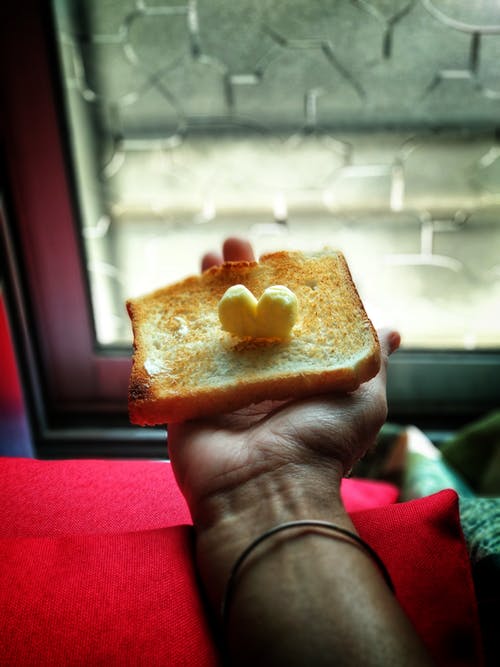
“I put butter on your sandwiches. I don’t know what Mom puts on the sandwiches, but I like butter, so there’s butter on the sandwiches,” he said talking softly and swiftly, more to himself than to me.
He wore stress like a welder’s mask covering the emotion beneath, protecting both of us from the blazing, palatable pain in the room.
“It’s ok, Daddy, I like butter on my sandwiches,” I lied.
I had never had butter on my sandwiches. Mom always made my salami and mustard or ham and mustard sandwiches sans butter, but I was willing to try butter in this instance if it meant Dad’s droopy eyes would go back to normal.
Somehow, Dad got all five of us off to school with lunches in-hand, our names neatly written in his all caps printed writing on the paper bags. He wasn’t aware that Mom usually only put our first initial on the bags, but he seemed to take pride in writing out our full names. As I reached up to grab my bag off of the countertop, I felt the weight of this small morning task he had performed. With a butter knife and some paper bags, he taught me what perseverance looked like.
I took my cue from him even though my insides felt like jiggly, shaky jelly, I grabbed my bag and walked out of the door with my brothers to school. I found that place inside where you only see the few, small steps in front of you, not the big scary monster behind you, or the unknown, overgrown path in front. When I bit into my sandwich at lunchtime, I realized for the first time that butter tastes just as good on a salami sandwich as mustard. It wasn’t the same as mustard, but it was a sandwich and it was good and my dad had made it in his undershirt and dress pants before he left for work.

 Jeannine M. DeHart