Eighteen months ago, on a brilliant fall day, the sky cerulean with nary a cloud visible, my 16-year-old son was driving, while I rode shotgun on the way to his step-sister’s softball tournament. I was still getting used to him driving with his learner’s permit while I did my best to remain calm in the passenger’s seat. Unlike my mother who had screeched and sucked in her breath sharply at every turn when I learned to drive. Suddenly, my son leaned forward and turned off the music. That was my signature car move over the years when I needed to discuss something serious with him; answering the ‘where do babies come from’ question, warning of the dangers of drugs and alcohol when he was a pre-teen, wading through the murky waters of custody and divorce from his dad. These discussions began in the car with me leaning forward to turn off the music. The enclosed, quiet privacy of the car combined with my eyes facing forward, always lent itself well to tackling tricky conversations. I knew this gesture signified he was about to say something heartfelt and important. I tried to squelch the internal panic I felt give rise in my belly. Utoh.
“Mom, I have something to tell you,” he hesitated.
I knew his hesitation wasn’t fear-based; I was confident our relationship transcended the inability to speak about difficult things. Tough conversations, while not always comfortable, came with an ease well-cultivated from a long-trusted, loving, calm, relationship between us.
“Ok,” I said trying to sound nonchalant.
“I didn’t tell you the whole story about why Meg and I broke up,” he said about his recent girlfriend of nine months.
Please, please, please don’t let her be pregnant.
“I really don’t know how to say this,” he struggled a bit.
“It’s ok, whatever it is, you know you can tell me,” I assured. Except if she’s pregnant, don’t tell me that.
A long silence ensued. I tried not to let the lull panic me.
“Mom, I think I’m gay,” he said, “No, actually, I know I’m gay,” he quickly corrected.
“Oh, ok,” I shrugged and sighed with relief. No premature grandchildren for me.
We talked more about how and when he came to the realization about his sexuality. While I had a few inklings along the way, I’m not one of those moms who can solidly say I knew my son was gay. He said I could tell a few, trusted people, and everyone else he would tell when it felt right. By the time we arrived at the softball tournament, we had covered a lot of ground about the reveal. My head was spinning, to be honest. I took a few minutes to call my best-friend-since-sixth-grade. She was on the shortlist of trusted people. I wasn’t shocked or disappointed or anything of that sort but needed to talk it over with someone close to my heart. My world suddenly felt a bit off-kilter, not because my son was gay, but because everything I thought I knew about him was suddenly different. Not different in a negative way, just different in that I thought I knew my son inside and out. It’s strange as parents how we see our children one way, but our view may not always be accurate.
As days went by, I was overcome with a bevy of emotions, but the weightiest one was pride. I am proud my son is secure enough in himself to come out. I am proud of the relationship I have built with him, which allowed him to know he would be fully embraced and loved in the same manner he’d always been. I had to do a little mental shift in thinking when it came to his future. I had long assumed the heterosexual social constructs of traditional marriage and kids would apply to him. Now, my vision for his future involves a husband instead of a wife and as a bonus, no unplanned pregnancies.
Shortly after coming out, he began seeing someone or as the teens call it ‘talking to’ someone. There was a shift in our household rules. Previously, friends of the opposite sex weren’t allowed in the teens’ rooms unless the door remained open in hopes we quelched the temptation to explore. Suddenly, guys were not allowed in my son’s room with the door closed, but when he asked if a female friend could stay over, I had to think for a minute. It was similar to my step-daughter asking to have a girlfriend sleepover, right? The waters became a little muddy in that regard, but we all adjusted fairly easily. There were other adjustments in thinking and in rules and in discussion, but nothing earthshattering or difficult to embrace.
As more time passed, a fear I didn’t anticipate began to grow just beneath my surface, almost reaching a panicked crescendo. I was a teenager in high school during the height of the AIDS epidemic when discrimination, violence, and misconceptions about the LGBTQ community often made headlines. I remember watching a gay high school classmate being shoved hard against a locker by four upperclassmen while they vehemently called him a faggot. As a society, we have come a long way from those days, yet the LGBTQ community remains marginalized. I deeply thank all the brave souls who went before my son, clearing the way for him to openly embrace his sexual orientation. He is proudly out and about among most of his family, friends, and classmates without having experienced any negative reactions. Gen Z is much more open and accepting than my Gen X was about sexual orientation, gender fluidity, and sex as a whole, which is a beautiful thing.
Since my son’s coming out, members of marginalized communities have moved from my peripheral vision into my direct line of sight. There are no longer six degrees of separation between me and any marginalized community. I am suddenly seeing things from a very different perspective. I should have been seeing things differently all along, but experience has a way of teaching us new lessons. It’s hard for me to hear off-color gay jokes. I cringe when people use the word gay in a derogatory manner. These things irritated me before, but now they hit me in a completely different way, equivalent to a gut punch. Hey, you’re talking about my SON.
Then there is the fear that someday someone may treat my son differently simply because he is gay. In my head that sounds a lot like, oh my fucking god, someone may want to hurt my son because he likes guys! As the college acceptance offers roll in, and I think of him being away from home next year with new friends and a new environment, my fear rolls in, as well, like a dense fog. When I express this fear to him, he waves me away with a hand, “Mom, it’s not like that anymore,” he says rolling his eyes. I know he is partially right, but he is also somewhat naïve at almost eighteen. There are still biases and hateful people in the world who act upon those biases. When I bring it up to my friends, they often say the same and assure me there is no need to worry. Yet, I do worry. As parents, we want nothing more than for our kids to be ok. Thinking of my son going away to college feels like putting him on the kindergarten bus for the very first time. Please world, be good to my son.
I do have confidence in my son’s ability to navigate these waters, despite my concerns and fears. He is a well-grounded, smart guy who I’m sure will make his way in this world even with a worrying mom in the background. I look forward to the day when and if he falls in love and finds a life partner and maybe decides to have kids.
As for me, I have told a handful of people my son is gay. Previously, I was selective in who I revealed this to for fear of judgment or lack of acceptance but screw that. I’ve since realized it’s important for me to come out as a gay teen’s mom in support of my son.
What a mother 2020 is turning out to be, huh? Pandemic, mystery seeds from China, Tik Tok controversy, presidential election, political divides, and racial tensions. I don’t know about you, but I feel like I’ve been on a roller coaster ride for the last five months and not a short-lived, fun-filled ride. More one that makes you puke when the coaster rolls into the station.
Shortly after the pandemic began, New Jersey was inundated with COVID-19 cases and I found myself unexpectedly working from home. I was excited by the prospect of having three hours of commute time to use in more productive ways than sitting in NJ highway traffic. I was excited to be the kind of present mom that working full-time had disallowed. I even wrote a couple of articles about how great all of this would be and how there was a silver lining to lockdown. I was so funny. I had grand, grand plans — I would clean the pantries, stock up on essentials in case the worst happened. I would make homemade, nutritious meals, and serve them at the proper dinner hour instead of at 8:30 pm. I would edit and polish my manuscript and shop it out to agents. I was excited about this new work from home gig.
At first, I did do many of these things. I greeted the teens with hugs and fresh eggs and toast for breakfast, or whatever their little hearts desired. A few hours later, I would make a healthy lunch for them, as well, and then start planning dinner around 3:00 pm. I promised myself I would workout every day and use the extra time to run a few more miles, too. I stoked my passion for trail running again, by getting out for lunchtime runs. I baked multi-grain bread, and homemade croissants that I had been promising to make for years, and years. I folded loads and loads of laundry. I painted and redecorated our laundry room. I cleaned feverishly to keep the germs at bay that my husband, a nurse, brought home from the hospital. I plowed full-steam ahead.
One day, I found myself getting irritated with the teen’s needy requests for breakfast, then lunch, then dinner. Really, what am I doing? I felt resentment seeping into my little, perfect, pandemic world. I mean, they’re both teenagers old enough to take care of their own meals. Next, I found it hard to sleep. All the tasks I had required of myself poked at my psyche while I tried to sleep, coupled with worries about catching the virus and what that would mean for our family. During the day, I found myself getting teary for seemingly no reason and feeling anxious. Still, I continued to pressure myself to get all the things done, ignoring the fact that I was also working a full-time job in the middle of trying to play Susie Homemaker.
I was learning how to navigate working from home with new technology, finding workarounds for easy, everyday corporate tasks, keeping in touch with those who work for me, and trying to sustain and prove my value within my new workplace environment. In addition, I don’t have dedicated office space at home, but rather shared our living room with two teenagers who were remote learning and navigating their own set of social and educational changes. At first, we managed to successfully occupy the same space all day, day after day until later in the afternoons when they were done with school and I still had work to do that required attention to detail. I found myself annoyed at every turn from normal teenage happenings. Add to the mix, my husband working on the frontlines, and I was struggling — hard.
One day, an email popped up from my gynecologist, which read something along the lines of ‘these are stressful times, and many of us may be feeling anxiety and depression. We are prepared to handle these issues via telemedicine.” Feeling exceedingly desperate, I called to make an appointment. I am hard-pressed to take an Advil for a headache, so talking this step was difficult for me, but I knew something had to change. I had been down this road seven years ago when my mom passed away, so I knew the anxious-trying-to-keep-it-altogether feeling and I knew medication had helped before. Days prior to the telemedicine appointment I felt dread, defeat, but also hope that I could find a way to manage some of what I was experiencing. My gyn discussed some options and I decided a short-term, short-acting anti-anxiety medication was worth a go. I filled my prescription, initially not even telling my husband. I was too embarrassed. I was keeping it all together, after all.
Despite my reservations about taking it, the medication certainly helped. I could finally sleep and give myself a little breather from all that was weighing me down. In this clarity, I realized I could no longer keep up the frantic, pandemic pace, and unrealistic expectations I had set for myself. I needed to make some serious changes.
First off, I fired myself as breakfast cook, and let the kids handle that unless I truly had the time and would enjoy making it. I let them fend for themselves for lunch. I stopped trying to bake homemade goodies and complicated dinners every day. I stopped vacuuming and scrubbing and disinfecting every day and somedays let the laundry pile grow large. I have a plan to carve out some dedicated office space before school starts up again, as it looks like we’ll all be home toiling away on our computers this fall. I’ve given myself permission to embrace the fact that these are uncertain, often scary times. I have allowed myself to adapt gently without feeling like I have to get everything done and get it done now. There are still days when I find myself chasing that non-existent Susie-Homemaker-Work-from-home rock star, but I try to temper the feeling with a heavy dose of reality.
If you’re struggling, like I was, don’t hesitate to reach out to friends, family, or professionals to help sort through those feeling so you can find balance again. I wish I had done it sooner. It is important to remember these are unprecedented times, and there is no right way to tackle every feeling and every new adjustment/development this pandemic is tossing at us. I lost myself for a little while in the thick of the pandemic chaos, but I also found how to take care of me.
Grandma appeared after Mom vanished into the mental healthy system void again.
The bare ends of our feelings were sensitive, raw, and exposed. Grandma’s presence was like a pair of wire strippers, hastily exposing them further.
She was bending over near the back door — the same door that our supposedly dead father had walked through only nights before — shaking her head as she straightened up the plethora of shoes seven kids could accumulate. She sighed heavily, disappointedly, as she went about making sense of the pile.
“If you children would just keep order, straighten your shoes, help your mother out,” she said unkindly. “She wouldn’t be in the hospital again,” she said exasperatedly.
Like a porous, scratchy sponge, my soul soaked up the message. We were to blame.
Blame was something that tracked me, tracked all of us, like a predator. While a manic episode was happening, while Mom was in the hospital, when she came home in a state of fragility, confusion, and anger, blame was there. What had I done wrong? What had my brothers done wrong to make Mom go crazy and then go away? Weren’t we just normal kids?
Grandma turned around, appraising me with her watery blue-green eyes as she continued to straighten.
“Are you listening to me?” she hissed, “Your mother shouldn’t have to do this. It’s all too much for her,” she said, her Czechoslovakian accent becoming thick with frustration.
I shrugged my tiny shoulders. I thought adults were supposed to have the answers. She stood up, disgusted, and walked away.
Grandma stayed with us for what seemed like a year but, was probably much closer to a few weeks. She criticized me for wearing socks to bed. She threw out the giant stuffed dogs a friend of Mom’s had given Chris and me as comfort a day before.
“These things will get filthy in no time!” she had said, loading them into a garbage bag as Chris’s eyes filled with tears.
She chased my brothers around the kitchen with a wooden spoon when they misbehaved, infuriating her further when they ran away laughing.
“I’ll make you sorry for laughing!” she threatened.
One morning, Grandma cautioned us not to put too much sugar on our cereal for breakfast. We were accustomed to pouring spoonfuls of sugar on top of our already sweetened cereal.
“The next one who puts sugar on their cereal is going to eat the whole bowl of sugar,” she admonished.
Eugene had just dipped his spoon into the sugar bowl and began to sprinkle it on his cereal when Grandma got up and dumped the contents of the sugar bowl into his cereal bowl.
“You won’t do that again, will you?” she said hovering over Eugene as he began to struggle through the dry pile of sugar.
Her presence made my nerves stick up in points on my skin. Every sound seemed excruciatingly loud. Every sharp word vibrated those points on my skin. I felt on edge and electrified. Up until that point, I had only known Grandma in her cozy home, cooking dinner for my aunts, uncles, and cousins on Sunday afternoons and holidays. She was the quintessential, adorable grandma then, with a hand-sewn apron, sensible shoes, and an easy laugh. The home she shared with my grandpa was warm, joyful, and always smelled delicious — like warm, apple pie. I didn’t like this version of Grandma now filling our rooms with fear and admonishment. Adults were becoming very complicated.
One sticky, warm day, Grandma enlisted Aunt Audrey’s help to get our house in order while Mom was away. They tackled the task of washing the tobacco-stained kitchen walls. The brown tobacco residue made long streak marks down the mint green paint as they scrubbed. They scoured and waxed the mottled, multi-colored kitchen linoleum that had lost its luster years before Mom and Dad bought the house when I was a newborn. They moved furniture, rearranged, and reorganized all day as if this would cleanse the crazy from Mom. They were like mediums waving burning sage to chase away evil spirits. We were in need of fixing, and in the absence of fixing, at least we would be clean. If these things were perfect, Mom would be ok, except Mom couldn’t send seven kids back from whence they came. Mom couldn’t make Dad stop drinking, and our bank account suddenly fill with money nor could she repair the broken, crisscrossed wires in her brain.
Dad walked through the door that evening with his tie already loosened on the 40-minute drive home from work. There was no stop at the bar for him, as he knew Grandma would be waiting with reproach. He set down his briefcase just inside the back door, ran a hand through his prematurely gray hair, taking in the scene with pursed lips. Aunt Audrey was standing on our paint-splattered ladder in the kitchen scrubbing walls. Grandma was standing beside her holding Mom’s blue cleaning bucket. Dad looked how I felt — displaced. He sniggered sarcastically, shook his head, nodded at them, and walked briskly past them to the bedroom. They considered Dad part of the problem and, would have subjected him to a good scrubbing if given the opportunity.
Weeks went by and Grandma stayed. She softened as time went by. In small moments between her impatience and blame placing, she could be kind and loving, like I imagine grandmas are supposed to be, like I always assumed Grandma was. She took Chris and I on long walks around Stillwater after school. She walked with us to the cemetery, to smell the honeysuckle, which wasn’t the same without Mom. She held our hands as we walked to the General Store where sometimes Mom treated us to penny candy from the glass display case. We continued down Main Streed towards the old, stone Grist Mill. We rarely walked that far with Mom, but Grandma walked us all the way to Stabile’s farm which was about two miles away. There, twenty or more horses grazed on the bright, green grass that sprouted alongside the Paulinskill’s tributaries wending through the pasture.
We reached through the fence and petted the horses’ velvet noses, while they nibbled our hands looking for treats. Grandma reached into her pocket to pull out a few sugar cubes she had stashed. We held the cubes up to their noses while the horses nudged each other, vying for the goodies. On the long walk back, Grandma reached into her pocket and stealthy tossed pennies down the road for us to find.
“Grandma!” Chris giggled, “You’re doing that!”
“Oh no, no, no!” she would say with her slight accent, feigning seriousness.
It was in moments like this that I felt genuine syncopation of my DNA with Grandma’s. I grabbed her hand and she gently squeezed back — it was the little bit of Mom I so desperately needed.
One day, Dad called Chris and me into the kitchen.
“Hey, how would you guys like to go visit Mom?” he asked with enthusiasm. He had taken the older boys to see her but, hadn’t let us go yet.
“Yes!” we exclaimed. We missed her terribly.
Dad drove us to the same low, brick buildings he had a few years before. This time I could read the sign outside that read “Carrier Clinic”. He took our hands in the parking lot, checked into the reception area, and then we walked down a gray hallway to a spartan room with a couch and two chairs.
“Sit here guys. I’ll go get her,” Dad said reassuringly.
Soon, we heard footsteps outside the room. I sat on the edge of my chair. I would finally get to see Mom. She entered the room followed by Dad and a plump, nurse with graying hair.
Mom looked like a tired, older, fragile version of herself. Her skin was drawn taut over her cheekbones. Dark circles looked like smears of dirt beneath her eyes. I recognized the sad, distant look in her eyes. I wanted to reject this version of her, to fling her into the farthest corners of the Earth. I slumped in disappointment. This wasn’t Mom.
We stood up to hug her. My motivation to move forward felt obligatory. I wanted my Mom. This Mom stood stiffly with her arms at her sides while we squeezed her. She looked at Dad as if pleading, Could you please call off these little beings. She sat down on the couch with Chris and me on one side and Dad on the other. The nurse stepped into the hallway to give us privacy.
I sensed Mom was afraid of us. Confusion brewed inside me like steam in a simmering teapot. Dad sat looking defeated while he tried to make small talk.
“What did you have for lunch today?” he asked as if talking to a child.
“I don’t really remember,” she said sounding tired and disinterested.
“Are you sleeping ok now?” he asked, furrowing his brow with worry.
“Yeah, a bit better. The drugs, you know.” a look of intimacy passed between them. She was looking at him to pull her from the depths. He looked down helplessly.
Chris and I sat stiffly, silently, not understanding why she wasn’t better after spending all this time in the hospital. Chris looped his arm through mine and leaned in closer to me.
We stayed for a few more painful minutes before Mom, asking for permission said, “Is it ok if I go back to my room now?” her voice small and uncertain.
“Yeah,” Dad nodded heavily. Chris and I clung to her for a moment, as she remained stiff. She turned and disappeared down the hallway looking like a shuffling zombie. Dad looked after her, shaking his head and sighing heavily.
When we got into the car, Dad asked cheerfully, “How would you guys like to go visit Grandma DeHart?”
“Yes!” we answered. Anything to erase the memory of the stranger we had just seen.
On the way to Grandma DeHart’s, Dad swung the car into a Burger King drive-thru.
“You guys want a burger and fries?” Dad asked, his eyes alight.
We shook our heads enthusiastically, yes! We hardly ever went to Burger King, or anywhere out to eat for that matter. We happily scarfed down our greasy treat while Dad pulled into a liquor store parking lot.
“You guys stay here. I’ll be right back,” he said. He returned with two six-packs of the familiar silver and red cans of Budweiser beer. He opened one of the cans with a snap and a fizz, and took a long sip before he started up the car again. He stuffed the can down between his thighs and backed the car out of the parking lot.
When we arrived at Grandma’s, we followed Dad up the steps of the old, gray Victorian house at 1026 Sanford Avenue in Irvington, New Jersey. Mom didn’t like stopping at Grandma DeHart’s house, so we hardly ever went, and when we did, we never stayed very long. I had no feelings whatsoever for Grandma DeHart. It felt like a kindly visit to an old, lonely neighbor.
We walked through the front door, Dad giving a “Hello?” while closing the door behind him. Grandma, more than a few inches taller than Dad’s 5’10 height, and big-boned, ambled out of the kitchen wearing a light-gray dress, white apron, orthopedic, black shoes, and thick glasses perched on her nose making her eyes beneath look as if they were behind a fishbowl. She was not what most people would consider an attractive woman. Maybe she had once been, but I only saw an old, big, tall lady.
“Hi kids,” she said softly. She didn’t bend to hug us or engage us in any way. Dad leaned in to give her a peck on the cheek. She patted his back stiffly, awkwardness separating them. My normally outgoing Dad morphed into an awkward, obedient teen.
“Good to see you, Mom,” he said stepping away from her.
Uncle Billy, Dad’s older brother, came into the foyer from the kitchen, tall and rail-thin.
“Hey, Hi,” he stuttered, “It’s good, gggood to see all of you.” Uncle Billy said, his gentle eyes smiling.
Chris and I went to sit in the sun-porch at the back of the house while Dad caught up with Grandma and Uncle Billy. We didn’t have anything to do, so we played our made-up games and then found our way outside to the small backyard, which was so much different than our expansive one back home. Grandma DeHart’s yard was fenced-in with a little storage shed placed at the back of the property. Her house was closely surrounded by neighbors on either side and to the back. The fragrance of the yard was urban-city exhaust instead of the familiar green-grass and hay scents wafting in our backyard. Grandma’s yard looked as though no one had ever played a game of tag or had a barbeque or ran under a sprinkler. Even though it was neatly kept, it looked like a cold, sad place to live.
Eventually, it got dark, we got bored, and our bellies began to growl. I went into the florescent-lit kitchen to sit with Grandma and Dad at the small Formica kitchen table pushed up against the wall, while Chris went to pester Uncle Billy. I sat quietly and watched as Dad had one beer after another, his laughter becoming louder as he emptied each brown bottle. The Budweiser was long gone and he was onto Grandma’s stash. Grandma seemed to be matching Dad beer for beer.
“Hey Daddy, we’re tired. Can we go soon?” I finally asked in a small, quiet voice, remembering how Dad had said Grandma DeHart believed children should be seen and not heard.
“Ok, we’ll go soo, Fluff,” he said ruffling my hair, slurring.
He looked at Grandma.
“I’d betta get thess kidz home,” he said to Grandma, again slurring.
I watched him sway as he got up and stumbled his way to the bathroom. Then Dad said his goodbyes and we followed him out to the car. He lurched from one side of the sidewalk to the other, having difficulty staying upright. He giggled at himself.
“Take care, Paul” Uncle Billy called after him with concern.
Dad put up a hand to wave without turning around. Chris and I looked at each other concerned, although we didn’t connect the fact that Dad was stumbling with his inability to drive a car. Dad often had a six-pack of beer wedged between his thighs in the car. This didn’t seem any different. Chris and I, tired from the emotions of the day, sprawled across the back seat of the red AMC Hornet, and drifted off to sleep.
We awoke later to the feeling of the car swerving and a horn blaring. We sat up to peer over the front seat. Dad’s face was scrunched up in anger. He gripped the steering wheel tightly with both hands while perching himself close to the steering wheel as if he were having trouble seeing.
“Goddamn Bastards, driving too goddamn slow!” he seethed angrily through gritted teeth.
Chris and I exchanged looks and ducked down behind the front seats, sensing danger. My body began to shake as Dad aggressively changed lanes, forcing other cars out of the way, our car swerving in and out of the fast lane. Headlights flashed by the side windows in a blurry streak. I peeked over the seat to see the speedometer inching towards 90 miles per hour, the car shaking and protesting with the increasing speed. We’re definitely going to die, I thought as I reached over to pull Chris closer to me.
It wasn’t until we were off the highway and on backcountry roads again that Dad eased off the gas pedal, finally slowing the car. Once his anger dissipated, I felt a sense of relief. The constricted feeling in my chest loosened and I could take a full breath again, even though his driving was still erratic and unsteady. When the car rolled safely to a stop in our driveway, I grabbed Chris’s hand and leapt out of the car. Fireflies gently greeted us home with their mating dance, which juxtaposed how I felt inside. I glared over my shoulder at Dad as I walked through the kitchen door. Suddenly, I was scared of him, too.
When the lockdown in my state of New Jersey started, I wrote this nice little essay about how great the pandemic could be for our family because we would have all this glorious extra time. How wrong I was!
Here we are into week 5 of the lockdown and here’s how it’s going:
Working from home is hard when kids are also attending classes online. My mornings usually begin quietly. I get up first, let the kids sleep in a bit since they don’t have to log into school at any particular time. Then I walk the dog, fix a cup of tea, empty the dishwasher and open my laptop to start my workday while still in my pajamas. When I rouse the kids an hour later, my work focus becomes a little blurry. There are requests for breakfast, which I accommodate, because how often am I able to make them breakfast on a school day? After breakfast, it’s back to work for me as the kids log into Google Classroom to get their assignments for the day. Around mid-day, the teens get restless regardless of whether they’re done with their schoolwork or not. I encourage them to go outside for a little while, mostly encouraged because I need a break from them by that point.
Once school work is done, the ever-eating teens are looking for a meal again. I respond with “You’re on your own for lunch.”
After lunch, there is roughhousing, and laughing, and loud music as the teens try to unwind from their school day. Thank god they at least have each other to get through this new concept called social distancing in absence of their peers. I try not to get annoyed with them given that I’m still working for another few hours. We have a small condo without a lot of quiet, dedicated space for working from home. It’s usually at this point I retreat to the bedroom and pop in headphones so I can continue to work uninterrupted.
Around 3:00 I take a little break, have some lunch and run the vacuum or throw in some laundry.
If my husband is home, it can be more challenging to sink my teeth into my tedious accounting workday. He is a nurse, so on his days off, he is extremely stressed about the hospital working conditions and lack of Personal Protective Equipment(PPE) during this pandemic, which I wrote about here. Rightfully so, he finds it difficult to unplug from the news and social media. He can’t turn off the need to want to DO something to help resolve the horrendous situation healthcare workers are faced with each day. I am proud of him as he makes phone calls, reads news articles, and touches base with his nursing union and his colleagues. In the background, I am churning away with my boring accounting work, thankful I have a job that doesn’t involve any sort of risk, but it still requires my attention and focus, which can be hard found.
When my workday ends at 4:30, I push myself to pull on workout clothes and either go for a run, do a HIIT (high interval intensive training) workout or a boxing workout (great for relieving stress). Some days, the effort to move my body the way I’m accustomed feels heroic. Some days I just want to curl up and take a nap. Occasionally, napping wins. After I return from the run or finish a workout, there’s dinner to consider.
The hungry teens are again ransacking the cabinets looking for food exclaiming “there’s nothing to eat”, even though there are options, although maybe not the usual options since I’m limiting trips to the grocery store for our safety. I get dinner on the table somewhere around 7:30. I had envisioned finally being able to eat at a ‘normal time’ while working from home, which never happens during a regular workweek since my 3-hour daily commute has me pressed for time every single night. But, alas, dinner is still late.
On the nights my husband works, I’ll do my quick disinfecting routine after he gets home to rid the house of any possible COVID-19 germs he may have brought home, yet it’s impossible to rid the house of the stress we’re both enduring from his profession. We eat dinner even later those nights, so we can all eat together as a family. Then the kids take their longboards outside for an hour or so, while we catch up with each other. If my husband can turn off his stress-filled brain enough, we’ll watch a movie or binge-watch the next best thing on Netflix. If not, I’ll think about writing, but will usually instead end up scrolling Facebook, Instagram and coronavirus articles online, also finding it difficult to turn my attention away from the chaos in the world.
Then it’s bedtime. I will fall asleep for about an hour and then suddenly awaken thinking about the craziness of the world. My mind spins with questions like — will my husband lose his job because he’s advocating for safe working conditions? How will we make ends meet if he does lose his job?Will we get sick?Will I get laid off or furloughed? Even though I have a very secure job, it’s still a possibility. I drift in and out of restless sleep filled with strange dreams and unanswered questions until my cell alarm clock prods me awake the next morning to do it all over again.
At the start of the lockdown, I felt compelled to use all this supposedly extra time to be productive. I put a lot of pressure on myself to make the best use of this time. I had a list of things to get done and I did pretty well tackling the list.
I reorganized closets and cabinets.
I painted a hallway or half of it until I ran out of paint and couldn’t justify risking a trip to the store for more.
I baked homemade bread.
I made delicious comfort foods, including banana bread which seems to be a pandemic staple.
I made my own disinfecting wipes.
We have spent more time with the kids, and we’ve had some laughs including an impromptu karaoke dance party.
I’ve long craved a simpler life devoid of the chaos that usually overtakes my work week, so I thought this lockdown would provide me with an opportunity to embrace simplicity and to an extent, it has. However, it is hard to ignore we are in the middle of something we’ve never before experienced and it leaves us with dark, underlying, unsettled feelings which are difficult to shake. Despite my best efforts to draw up the corners of my little world and create a protective environment away from the uncertainty unfolding, I feel like outside my window the Big Bad Wolf is yelling, “I’ll huff and I’ll puff and I’ll blooow your house down!” And, I’m scared.
My to-do list has gone out the window and has been replaced with simple tasks like; get out of pajamas, take a shower, make some food, and get my work done. The to-do list has been usurped by the fear of what comes next.
So, if you’re like me — finding it difficult to feel comfortable in our new lockdown roles, let’s all take a collective deep breath and give ourselves and those around us a lot of grace. These are uncharted waters for us, and we’re all in this together. Be well.
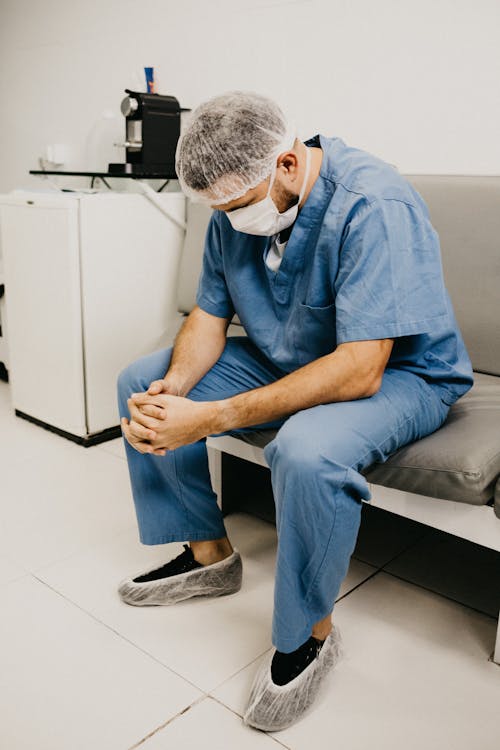
My husband has been a dedicated nurse for 17 years. Never in his career has he faced the life and death safety issues he now confronts every single day when he walks into the hospital to report for work. Every day he is, as a friend who also works in healthcare describes it, playing ‘Virus Roulette’ because healthcare workers everywhere are working without the proper personal protective equipment (PPE) and protective measures in place.
My husband is a nurse and I’m scared – petrified, in fact. I’m scared he will go to work, contract the virus and be the unlucky one who does not make it through. At the age of 54, he is healthy, but he is not a superhero immune to the illness, nor are any of his coworkers. I am scared he will bring it home to me and I will get sick and die. I am scared he will bring it home to our children, both teenagers, who will get sick and die. I am scared he will give it to his aging parents who are in the at-risk category. This is ONE nurse, in ONE family. Across the country there are hundreds of thousands of nurses, doctors, respiratory therapists, physical therapists, and other healthcare workers who are being unnecessarily put at risk during this crisis. Everywhere, everyone is preaching – Stay Home, Social Distancing, Flatten the Curve. Why isn’t anyone screaming that these wonderful people trying to do their jobs are spiking the curve – unprotected, they are bringing the virus home to their families who in turn go to the grocery store for supplies, and those people then take it home to their families. In addition, anyone entering the hospital a non-coronavirus related issue is also at risk because that friendly nurse coming to assist you may have likely been exposed to the virus due to lack of appropriate PPE. So yes, we are all doing our part to flatten the curve, but there are gaping holes in our healthcare system through which the virus and all our efforts to stop it are pouring out.
My husband signed up to be a nurse to care for people, but not at the risk of his health or his family’s health. We are calling them heroes and soldiers in this fight against COVID-19, but they are being sent into battle without weapons or armor. Healthcare workers are only asking for – screaming for the proper protections so that they may do their jobs safely – for everyone involved. They are not asking to be excused from their duties, but rather to continue to perform their jobs knowing they are supported and protected by their employers and by extension, our Country. If our doctors, nurses and other healthcare workers all get sick or die, NO ONE will be there to take care of us or our loved ones.
My husband and his colleagues feel strongly they have already been exposed to the illness due to the lack of preparedness on the part of hospital administration. This same scenario is playing out in hospitals throughout the country and it is only getting worse day by day. Meanwhile, healthcare workers are waiting for the virus to either hit them, their families or those they work alongside. My husband wonders if each day when he walks into the hospital if it will be the dreadful day the viral load becomes too much and it will be his turn to get sick and possibly die. Will he walk into work tomorrow to find one of his coworkers is on a ventilator? It’s all a crapshoot – Virus Roulette
He came home last night and when I reached to give him a hug and kiss hello, he pulled back, “I wouldn’t do that if I were you,” he said even though he had already changed out of his scrubs. He proceeded to immediately take a shower and throw his street clothes into the laundry. His face is etched with worry as he and his coworker exchange war stories, and strategies for keeping themselves safe. He anxiously watches and reads the news, watching the stories of unprepared hospitals in other states reaching capacities and healthcare workers doing their best to fight the war – like bringing a knife to a gunfight.
The other day, my husband felt compelled to reach out to the physician director of his hospital unit to express his discomfort in treating patients without the proper PPE, and in turn for reaching out, he was reprimanded by his supervisor. At every turn, healthcare workers are being told to hush – don’t speak out, keep your head down, and keep doing what you’re doing. They are turning to private Facebook groups to discuss the situation. They are afraid of speaking out for fear of losing their jobs. They are concerned about themselves, their patients, their families. They are concerned about everyone and carrying this heavy weight alone. Since when have we become a country who punishes people with the loss of their jobs if they bring up legitimate health and safety concerns? We need to find a way to support these people if we expect our healthcare system to support us during this pandemic crisis.
Healthcare workers are dealing with:
Sharing, wiping down or reusing N95 masks because there are not enough to go around.
The use of surgical masks rather than N95 masks is resource driven rather than safety driven.
No direction, communication, or culpability from upper hospital management along with misinformation.
Scarcity of adequate PPE
The current hospital environment is creating a cesspool of coronavirus
Healthcare workers immediately need:
Appropriate Personal Protective Equipment (PPE)
N95s – as regular surgical masks do not provide sufficient airborne protection from the virus.
Gowns
Protective Face Shields
Hospital Executives
Reach out on worker’s behalf to secure the proper PPE
Provide a supportive environment for healthcare workers rather than threatening job loss when legitimate safety issues are broached.
Hazard Pay – some hospitals are hiring temporary nurses at double the rate of their regular employees. Offer current healthcare workers hazard pay for working under duress.
Information – keep staff informed of the ever-changing situation and steps they are taking to address health and safety concerns.
My husband and I have had somber discussions about our wishes should either of us die. We have discussed him leaving his job, at the loss of half of our much-needed income. We have discussed him making a stand with his employer and his union at the risk of losing his job. He feels drawn to help, to do his job and not abandon his co-workers nor the patients who depend on him. In NJ we are awaiting the storm. In the next three weeks, we are expecting hospitals to be overflowing with patients. My husband is bracing for the influx of patients at the hospital and he has already been reassigned to other areas of the hospital to assist with the crisis.
Yes, my husband signed up to be a nurse – to care for and protect others – he did not sign up to do his job at the risk of his health, safety, and sanity and that of his family’s. Our healthcare workers are not expendable.
President Trump, are you listening? Surgeon General, Dr. Jerome Adams, CDC Director, Robert Redfield, CEOs of Hospitals, Directors of Hospitals, Heads of Nursing Unions, are any of you listening?
The idea of self-care has become a multi-million industry and a seemingly modern-day necessity, but maybe we need to start asking ourselves how we’ve gotten to this point?
Self-care is everywhere; yoga, girl’s weekends, wine, massages, meditation, and wellness retreats. Have you ever stopped to ponder why we need and seek out these outlets in the form of a pretty, little package entitled ‘self-care’? It is because we’re too stressed, too overscheduled, too plugged in. We’re too goddamn busy, too tired, too run-ragged, so we look around and say – oh, I really need to take care of myself. Maybe this deep desire for self-care is telling us something – the universe screaming at us to slow down.
We are drawn to self-care because:
24/7 Society – We live in a society where we are connected to technology all the time. Can’t sleep? Grab your phone off the charger and scroll Facebook or reach for your laptop and log into your work email. We have become a society that has trouble shutting down.
Poor Nutrition – We’re hustling from one thing to another on the daily. Get up for work, get kids ready for school, get to work, toil all day, maybe grab lunch at our desks, shuttle kids to activities, get dinner on the table, exercise, go, go, go. And where in that schedule do we stop to nourish ourselves – to enjoy a leisurely, healthy meal?
Sleep Deprivation – and speaking of our 24/7 society, this leads to sleep deprivation for most of us. Who gets that 7-9 hours of recommended sleep per night? Many of us are lucky if we squeeze in 6 hours of restful sleep. We’re often left burning the candle at both ends.
Corporate Culture – Long gone are the 9-5 days of corporate culture. We’re expected to answer emails promptly at all hours from home, even if we’re sick. We’re expected to check in on weekends and work endless, extended hours to get the work done. This can lead to burnout.
Relationship Burnout – We’re too burnt out from the hurried lives we lead to properly nourish relationships with the ones we love. Sometimes we are so burnt out from our hurried lives that it spills over into our relationships, leaving us with inadequate time and energy for those we love.
The good news is if we learn to restructure our daily lives, we may not push up against that wall of exhaustion. Here are some ways to incorporate self-care into our daily lives:
Unplug – Make the conscious effort to unplug when you get home. Set aside a no technology block of time so you can spend uninterrupted time spending time with family, working out, reading a book, going for a walk – anything to help you shutdown for a little while.
Meal Prep– While, I’m envious of people who can meal prep, unfortunately, I am not one of those people who is good at prepping my food for the entire week to come. If meal prepping doesn’t work for you, you can prepare enough dinner so there are leftovers the next day for lunch or while you’re chopping veggies for dinner, throw a salad together. Here are some good recipes that can be used for more than one meal or try these 30-Minute Clean Eating meals to save time in getting a healthy meal on the table.
Turn off Technology at Night – Mute your phone to all but the most essential callers, turn off any computer screens in your room, including the TV and make your bedroom a sleep sanctuary to aid in getting the recommended hours of sleep per night.
Set Reasonable Work Boundaries – While it is not always possible to push back against the 24/7 needs our work requires of us, it is possible to limit the time we do invest at work. Set some “off limit” hours while you’re at home when you are not available to answer emails, take calls, or do any form of work.
Couple Time – Use some of your off limit or technology-free time to reconnect with your partner.
Daily Self-care – Carve out small moments during the day to practice self-care. Here are some ideas:
Meditate
Exercise
Stretch
Yoga
Give yourself a mini-facial
Treat yourself to a mani-pedi
Take a ½ hour to read some of that book you’ve been meaning to finish.




 Jeannine M. DeHart